Energy storage
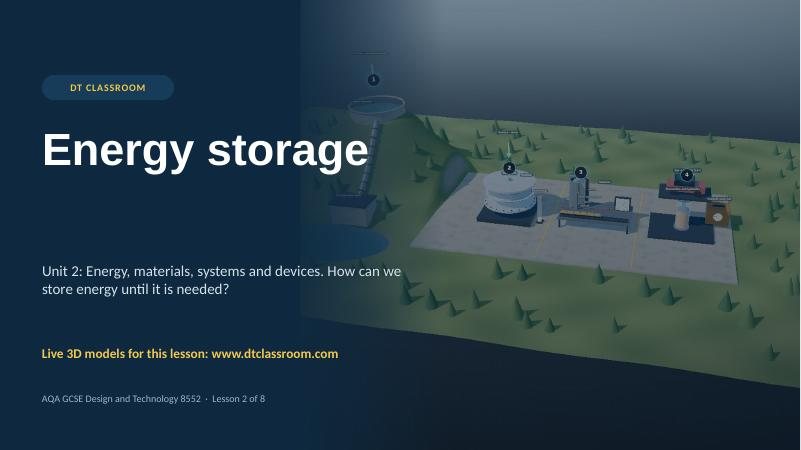
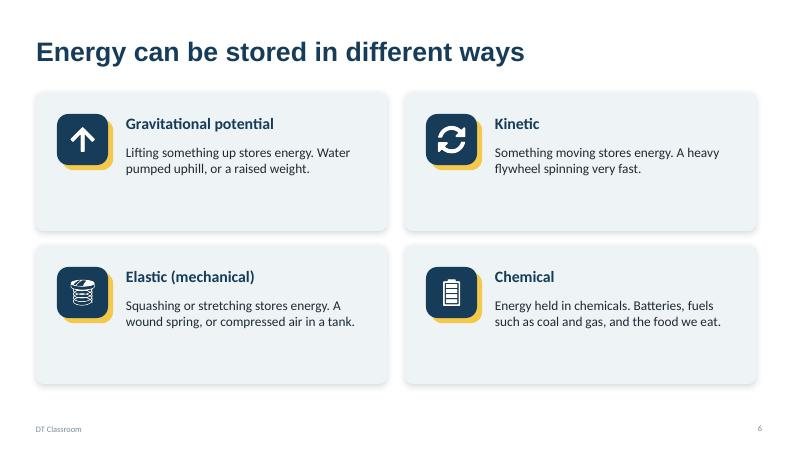
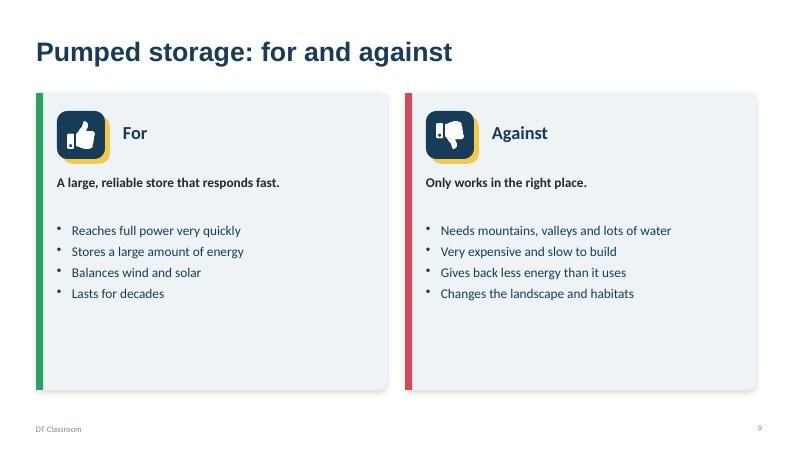
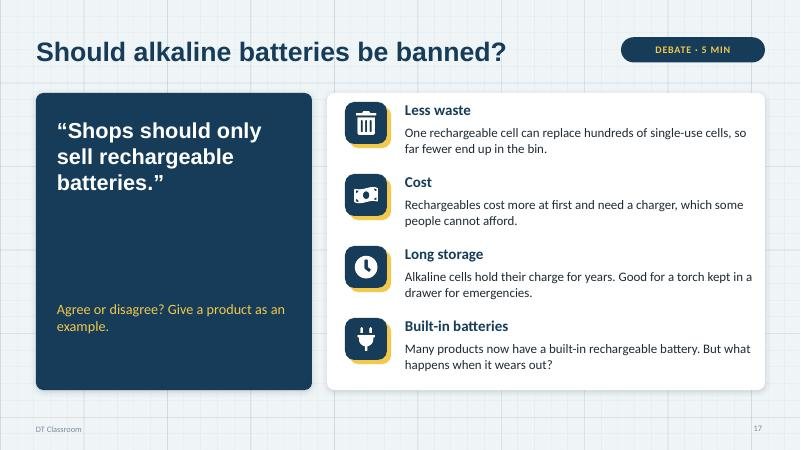
Unit 2 · Energy, materials, systems and devicesInvestigate batteries, capacitors and other methods of storing energy. Why we store energy, pumped storage, flywheels, springs and compressed air, cells in series, and alkaline versus rechargeable batteries, with a 3D storage site. Click-by-click builds, answer reveals, and teacher notes and answers on every slide.
What this lesson covers
Why we store energy, pumped storage, flywheels, springs and compressed air, cells in series, and alkaline versus rechargeable batteries, with a 3D storage site. Click-by-click builds, answer reveals, and teacher notes and answers on every slide.
60-minute lesson, 22 slides. Part of DT Classroom’s GCSE Design and Technology course, taught through an interactive 3D lab rather than static slides alone.
Practise and extend
Also available for this lesson from the teacher resources: lesson slides, knowledge organiser, worksheet.
Exam board coverage
Where this lesson sits in each GCSE Design and Technology specification, as an indicative mapping by DT Classroom (not endorsed by any board - check the current specification before relying on it).
| Board | Specification reference |
|---|---|
| AQA | 3.1.2 Energy generation and storage |
| Edexcel | 1.3 How energy is generated and stored |
| OCR | 3.2 Choosing appropriate sources of energy |
| WJEC Eduqas | TP1 Design and technology and our world |
See the full specification map for every lesson and every board.
Other lessons in Energy, materials, systems and devices
DT Classroom is a GCSE Design and Technology course: interactive 3D lessons, teacher slide decks, worksheets and exam practice, built for pupils and teachers. Exam board references above are DT Classroom’s own indicative mapping, not provided or endorsed by AQA, Pearson Edexcel, OCR or WJEC Eduqas.